

















































Converting ERP Data into Business Decisions with Zoho Analytics
Most companies believe that once they implement an ERP system, they will gain visibility. In reality, however, they only gain access to records.An ERP is effective in capturing transactions with discipline. This ensures that every invoice is logged, every purchase is recorded, and every stock movement is tracked. But when the leadership asks a strategic question during a review meeting, there’s no concrete answer. That gap between data and understanding is exactly where Zoho Analytics comes into play. In this blog, we have discussed how it helps to transform ERP data into valuable insights based on which businesses can make decisions.
Reporting Data to Interpretation
ERP reports tell you what happened. They rarely tell you what it means. For example, your business revenue may be growing. But you must evaluate the following:
- Is the revenue concentrated among a few customers?
- Are margins shrinking in one region?
- Is inventory moving more slowly than the last quarter?
These are not accounting questions but management questions.
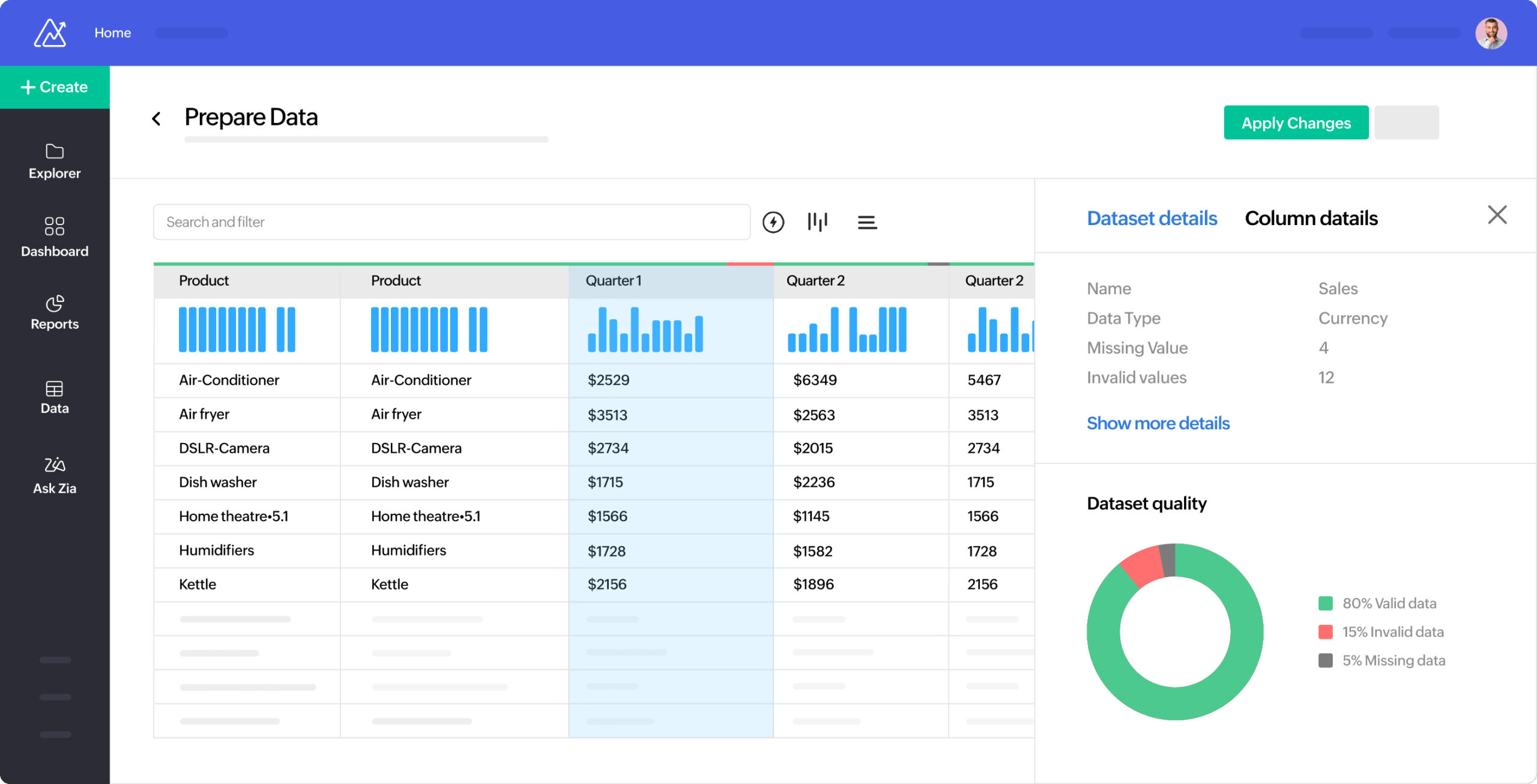
When teams connect Zoho ERP directly with Zoho Analytics, they can derive structured insights from operational data. Transactions get automatically synchronized into analytics where teams can view trends, patterns, and exceptions. No manual consolidation is required to access these insights.
The ERP continues running daily operations, while analytics runs in parallel. This brings clarity to the leadership, but doesn’t interrupt your workflows.
Better Visibility Makes Decisions Practical
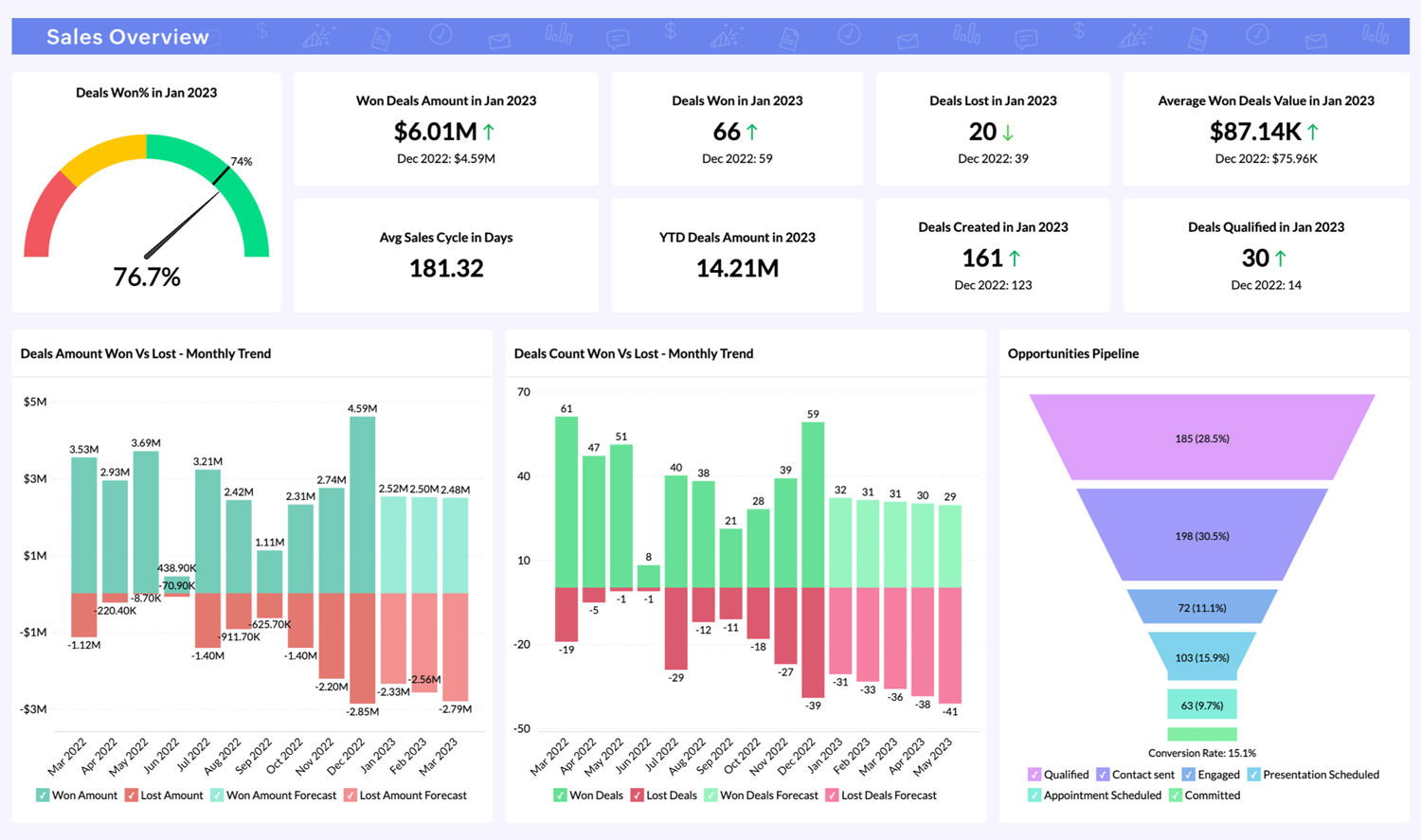
Teams can avoid the typical setup fatigue that slows down the adoption of BI with pre-built dashboards. Finance leaders can review the following immediately after integration:
- Receivables exposure
- Payables aging
- Margin Performance
- Cash flow direction
This ensures:
- Operations managers can monitor stock turnover and procurement efficiency.
- Sales leadership can track performance trends directly linked to invoiced revenue.
This is how organizations begin to maximize profits with Zoho Analytics. Productivity comes not from collecting more data, but interpreting existing data faster and more accurately.
AI Reduces Dependency on Technical Teams
In many companies, analytics requests depend on one data specialist. This dependency often results in bottlenecks.
Inside Zoho Analytics, business users can ask direct questions in simple language. They can explore margin declines, shifts in revenue, or expense spikes without building complex queries. Forecasting models help simulate outcomes before decisions are made. This reduces the dependence on preparing manual data and allows leaders to test assumptions quickly.
A Practical Advantage for Growing Organizations
As companies expand across geographies or business units, they face increasing complexity. This happens because of:
- Fluctuating exchange rates
- Inventory that remains scattered across multiple warehouses
- Diversification of revenue streams
Without structured analytics, leadership decisions rely heavily on instinct. When Zoho Analytics is connected to ERP data, real data patterns strengthen these decisions. At first, businesses notice subtle differences. Over time, these differences create a strategic impact.
Why choose Xponential Digital?
Technology delivers value only when it is configured with business context in mind. Professionals at Xponential Digital work closely with leadership teams to align Zoho Analytics dashboards, controls, and reporting structures with real operational priorities. Apart from implementation, the experts prioritize measurable clarity that helps teams make confident decisions. Businesses must consider consulting the professionals to integrate Zoho Analytics into their workflow effectively.







 Xponential Digital