





















































Turning Pipeline Data into Decisions That Close with Smarter Forecasting in Zoho CRM
Forecasting has always been at the centre of sales planning. But in most teams, it still relies heavily on manual judgment. Managers look at pipeline numbers, apply their experience, and eventually make a call. Sometimes that works. But more often, it leaves too much room for guesswork, particularly when deals move quickly.
This is exactly where Zoho CRM streamlines planning and execution. With its latest updates powered by Zia, the platform’s built-in AI engine, forecasting is no longer just a static report. It’s becoming something teams can actually act on while the quarter is still in motion.
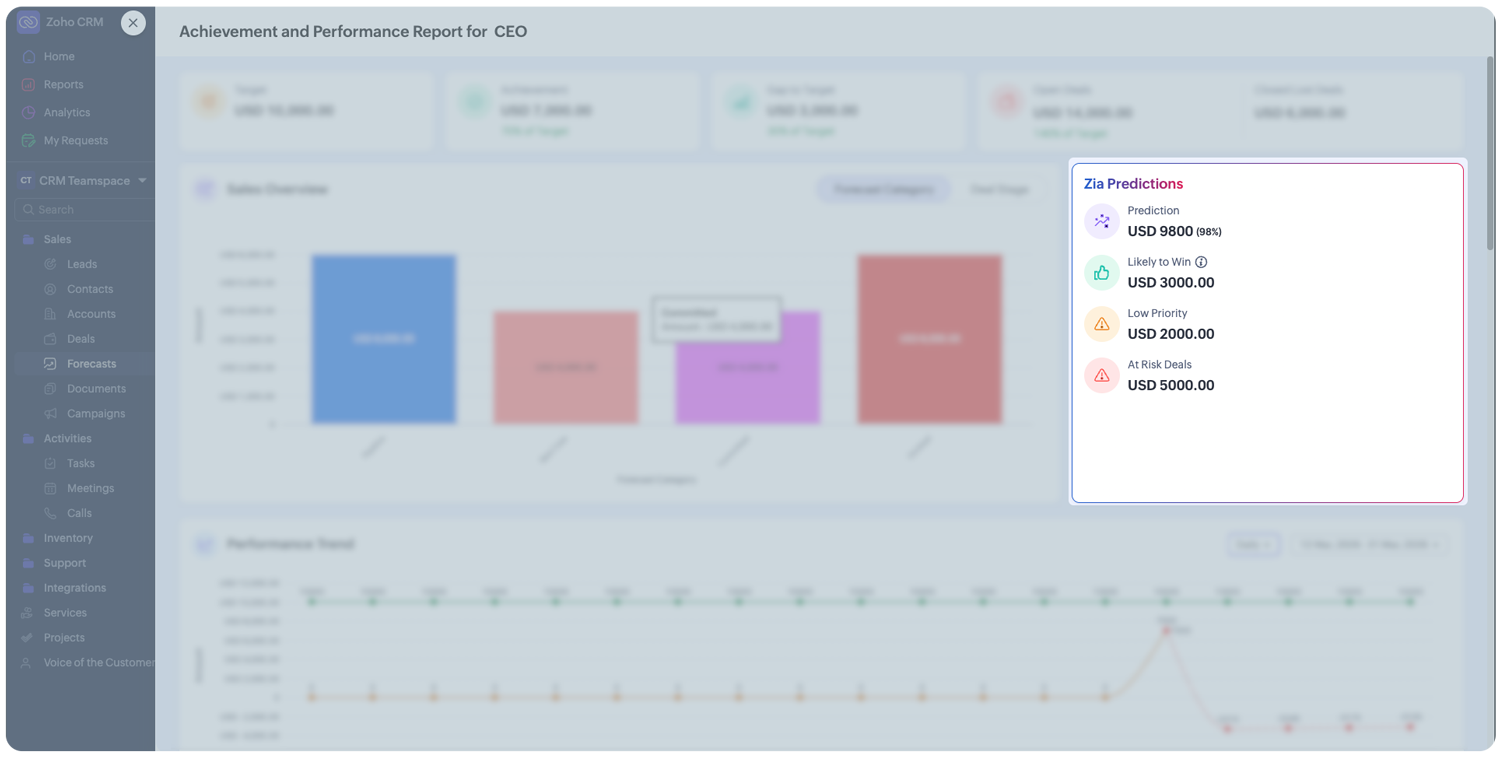
In real-world scenarios, Zia looks at your entire sales environment. This includes historical data, pipeline movement, deal stages, and even how individual representatives perform. Accordingly, it builds forecasts that keep adjusting as deals progress. The result isn’t just a number at the top of a dashboard. It’s context.
What’s Actually Changed
The most noticeable shift is how dynamic the forecasting process has become. Instead of waiting until the end of a reporting cycle, Zia now updates insights continuously. The forecast reflects almost immediately if:
- A deal slows down
- A conversion pattern on the stage changes
- The pipeline of a representative starts thinning out
You’ll also see forecasts that account for patterns teams usually miss. Seasonal trends, sudden spikes in activity, or unusual deal behaviour are now factored into projections, and there’s no manual intervention needed.
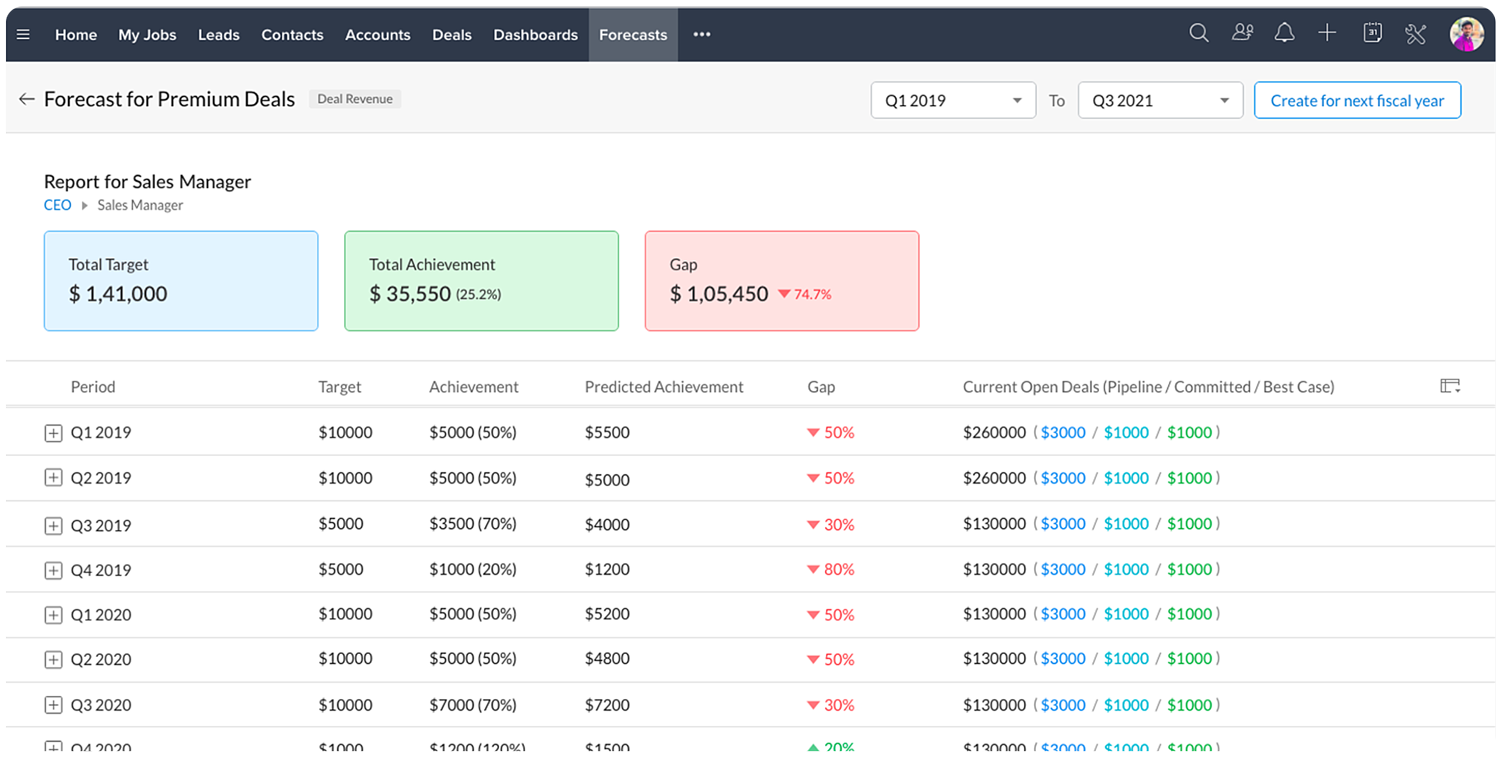
At the team level, managers get a more transparent view of what’s happening beneath the surface. It’s no longer just “who hit the target” and “who didn’t.” You can see:
- Why someone is ahead
- Where another representative is falling behind
- What’s likely to happen next if nothing changes
The focus on risk visibility has also become stronger. Deals that apparently look healthy but show signs of delay or inconsistency are flagged early. As a result, teams get a chance to step in before the quarter slips away.
Instead of waiting until the end of the month or quarter, quota tracking is now more granular. You can see how performance is shaping up week by week, which makes mid-cycle corrections far more realistic.
Many businesses are now exploring how AI helps sales teams close deals faster Zoho. It’s not about replacing judgment. It’s about giving teams better signals while there’s still time to act on them.
What This Means for Sales Teams
For most sales leaders, the real value isn’t the forecast itself. It’s what they can do with it.
With these updates in Zoho CRM, reviewing pipelines become more focused. Instead of going through every deal, teams can prioritize the ones that actually need attention. That alone saves time and improves the quality of decisions.
The dependency on manual reporting is also likely to come down. Managers don’t have to piece together insights from multiple dashboards or wait for summaries at the end of the week. The system is already highlighting performance gaps, deal risks, and improvement areas in one place.
For representatives, the impact is just as clear. When a manager knows the deals that are likely to close and the ones that need extra effort, they can strategically allocate their time. Over a quarter, that compounds into stronger outcomes.
From a leadership standpoint, forecasting becomes something you can trust. It’s not because the assumptions are perfect, but because the system is continuously learning and improving. This how AI helps sales teams close deals faster Zoho, reducing uncertainty and helping them focus on matters that actually draw in revenue.
Why It Works Better in Real-world Scenarios
What makes this shift effective is how naturally it fits into existing workflows. Sales managers don’t need to learn a new system or interpret complex models. The insights are presented in a way that answers simple questions:
- What’s happening?
- Why is it happening?
- What should we do next?
For growing teams, this level of clarity matters more than having more data.
Why Teams Work with Xponential Digital
Getting value from Zoho CRM isn’t just about enabling features. It’s about setting it up in such a way that reflects how your sales process actually works.
That’s where Xponential Digital comes in. The professionals not only deploy the system, but also align the tools with real sales workflows. This ensures that forecasts, pipelines, and reporting remain properly aligned.
From configuring Zia insights to structuring deal stages and performance tracking, Xponential Digital helps teams move from basic reporting to a system that streamlines decision-making.
Teams should remember that better forecasts aren’t just about accuracy. They’re about giving teams the confidence to act earlier, and close stronger.







 Xponential Digital