














































Zoho ERP : Built for the Enterprise
Less workaround. More workflow
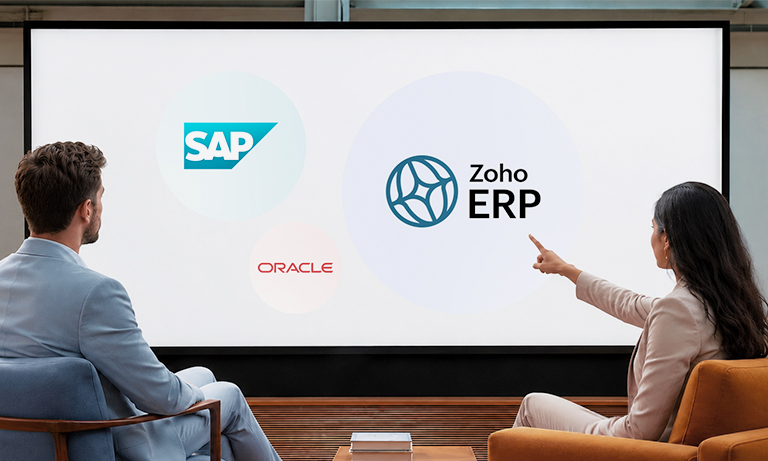
Zoho ERP eliminates the friction of rigid systems, giving your teams extensible tools, custom modules, and seamless integrations that actually fit the way your enterprise operates. Zoho ERP is designed around how your teams already work, so every workflow, module, and integration feels like it was built for your business specifically.
Platform Capabilities
Compared to most other systems, an ERP platform is integrated more deeply into a business. It handles data related to finance, operations, HR, and sales, helping enterprises make strategic decisions. For enterprise teams, the strength of the underlying platform determines how confidently the business can grow.
This is why the underlying platform proves as important as the ERP features themselves. Zoho ERP is built on an enterprise-grade cloud infrastructure that offers every resource on the platform. These include an infrastructure they can rely on with strong security controls. Businesses using Zoho ERP also benefit from flexible customization and native connections across the system.
Cloud Infrastructure
Many organizations tend to overlook cloud infrastructure until something goes wrong. Maybe, their reports slow down, and users struggle to log in during peak hours. At times, updates in the system disrupt daily operations. These challenges become far less likely when the platform is designed to grow alongside the business.
Zoho ERP runs on a multi-tenant cloud architecture that remains stable even as usage increases. As teams grow and data volumes expand, the system automatically scales in the background. It does not require IT teams to manage servers or schedule disruptive upgrades.
Key points
- 99.9% uptime SLA backed by a high-availability architecture designed for enterprise workloads
- Automatic updates without disrupting business operations
- Auto-scaling infrastructure that grows with your user base and data.
- Global data centres that keep the system performance stable
- Automated backup systems with point-in-time recovery for reliable disaster recovery
Security & Compliance
ERP platforms hold some of the most sensitive information inside an organization. These may include financial records, operational approvals, employee data, and internal communication trails.
Protecting that information is not just an IT requirement, but a priority for the business. Zoho ERP approaches security through layered controls. It restricts access based on roles, monitors activity through detailed logs, and encrypts sensitive data both in storage and during transmission between systems. For organizations in regulated industries, Zoho ERP is aligned with SOC 2 Type II, ISO 27001, and GDPR requirements.
Protecting that information is not just an IT requirement, but a priority for the business. Zoho ERP approaches security through layered controls. It restricts access based on roles, monitors activity through detailed logs, and encrypts sensitive data both in storage and during transmission between systems. For organizations in regulated industries, Zoho ERP is aligned with SOC 2 Type II, ISO 27001, and GDPR requirements.
Key points
- Role-based access controls with granular, department-level permissions
- AES-256 data encryption for storage and transmission
- Multi-factor authentication securing login access to the system
- Detailed audit logs tracking every user action across the platform
- Compliance aligned with SOC 2 Type II, ISO 27001, and GDPR standards
Customization (APIs, Extensions)
The key reason for the failure of ERP systems is not the lack of features, but their inability to adapt to how businesses actually operate. The approval structures, operational workflows, and reporting requirements vary from one organization to another.
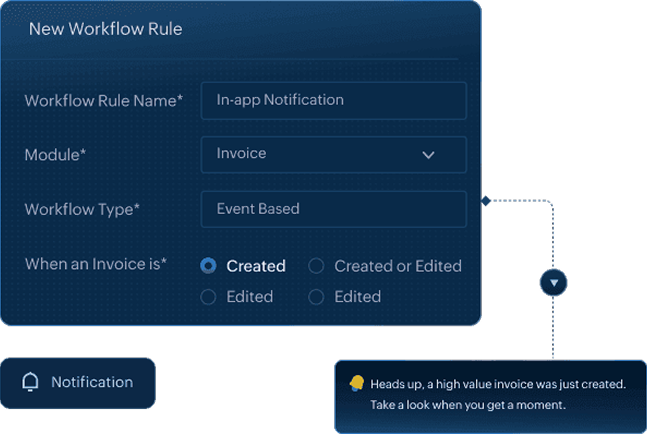
Organizations using Zoho ERP can shape the platform prioritizing those realities. This empowers business users to build multi-step approval workflows and add custom data fields without writing code. They can also introduce new data fields and use APIs to connect external systems. Businesses that have deeper technical requirements can use REST APIs, a developer SDK, and a sandbox environment to build functionality that fits the specific requirements of the operation.
Organizations using Zoho ERP can shape the platform prioritizing those realities. This empowers business users to build multi-step approval workflows and add custom data fields without writing code. They can also introduce new data fields and use APIs to connect external systems. Businesses that have deeper technical requirements can use REST APIs, a developer SDK, and a sandbox environment to build functionality that fits the specific requirements of the operation.
Key points
- No-code workflow builder for custom multi-level approval workflows and operational processes
- REST API connectivity for integrating third-party and legacy applications
- Custom modules and fields for business-specific data structures
- Industry-specific extensions addressing functional needs available through the Zoho marketplace
- Developer SDK and sandbox environment for deeper customizations of the system
Integrations with Zoho Ecosystem
Business data for most companies remains scattered across different systems. While the CRM shows sales activity, teams need to check the accounting software for updates on finance. On the other hand, the HR needs to manage the records of employees somewhere else. The leadership needs reporting tools to track every detail.
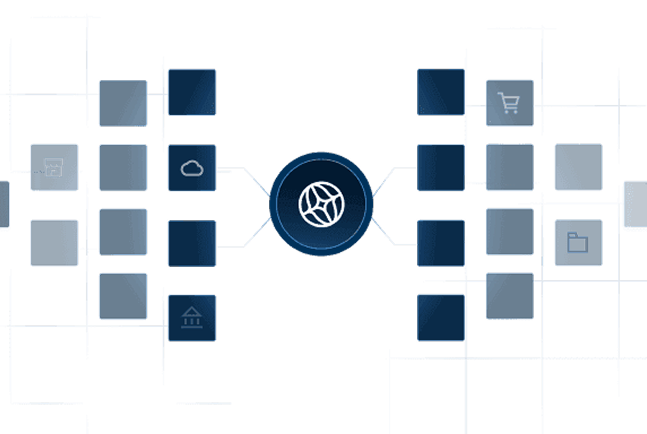
With all these tools operating separately, teams need reliable, connected systems so that decisions are always backed by accurate, up-to-date information. Zoho ERP becomes significantly valuable when it remains connected to the broader Zoho ecosystem. This ensures that information moves automatically across various departments, helping the leadership gain a more complete perspective of the business.
With all these tools operating separately, teams need reliable, connected systems so that decisions are always backed by accurate, up-to-date information. Zoho ERP becomes significantly valuable when it remains connected to the broader Zoho ecosystem. This ensures that information moves automatically across various departments, helping the leadership gain a more complete perspective of the business.
Key points
- Integration with Zoho CRM for real-time pipeline-to-revenue visibility on sales
- Connection with Zoho Books and Inventory for unified financial and stock management
- HR and payroll integration using Zoho People for workforce data in one view
- Cross-functional reporting and executive dashboards through Zoho Analytics
- Communication tools integrated via Zoho Cliq Mail and Zoho Mail
Get in Touch With Us



 Xponential Digital