





















































Dashboards Should Help You Decide, Not Just Show You Data
The sole purpose of traditional dashboards is to report data. In the conventional approach, dashboards have little to do with decision-making. They simply compile numbers from different systems and present them on a unified interface.
While leaders and teams may find the data data comprehensive, they still need to switch between tools, reports, and tabs to understand what’s going on. So, the lack of data isn’t the real problem, lack of context is.
That’s where Zoho One comes into the picture. It does not treat dashboards as static reporting layers. Instead, it introduces a new approach to how information is presented. This helps teams understand signals faster and act more quickly.
Why Traditional Dashboards Fall Short
As businesses scale, data becomes scattered across different departments. This includes sales, finance, operations, and support. This structure is typically reflected in traditional dashboards. Each function gets its own view, metrics, and logic.
However, in the real world, decisions cannot be made in isolation. For instance:
- A sales leader doesn’t just look at pipeline numbers, they consider the overall cash flow.
- An operations manager tracking delivery timelines needs visibility when demand fluctuates.
In case these signals remain in separate dashboards, teams spend more time connecting the dots than making decisions. This is where most dashboards fail. Although they show information, they don’t help teams interpret it effectively.
A Shift Toward Context-Driven Visibility
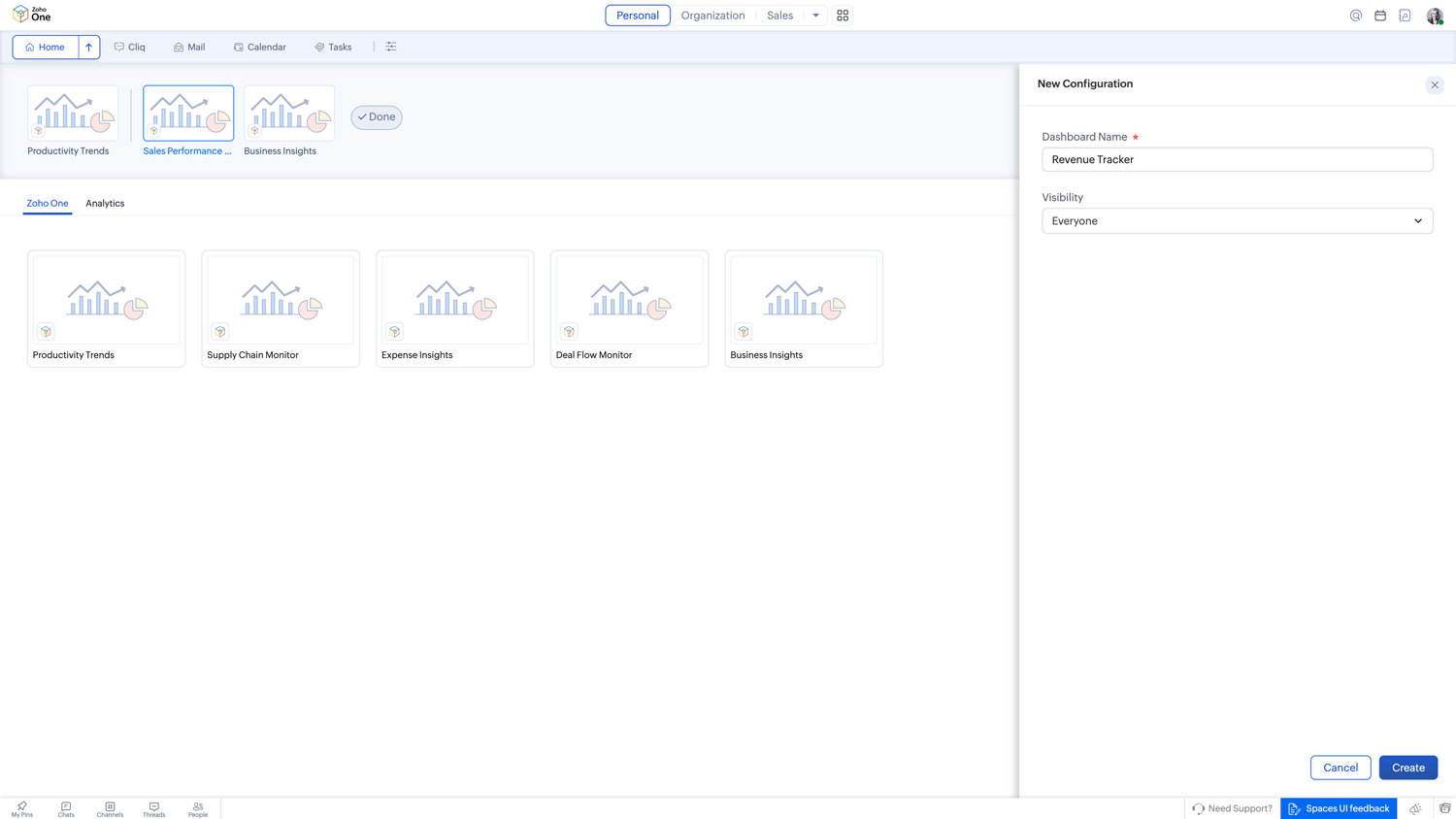
The newer approach inside Zoho One focuses less on “what data to display” and more on “what someone needs to understand right now.”
The system doesn’t try to fit everything into a single screen. Instead, it presents dashboards designed around specific ways of thinking. For example, if one view displays long-term trends, another may show daily execution. Another dashboard may help identify risks early. This small shift in presentation makes a significant difference.
Teams are no longer forced to mentally rebuild context every time they open a dashboard. The information is already arranged in a way that matches the decision they’re trying to make.
What Changes in Day-to-Day Use
Once dashboards reflect real workflows, the impact shows up quickly.
- Teams no longer need to switch between tools to verify numbers.
- Leaders no longer need to pull separate reports before meetings.
- Conversations can be initiated with a shared view of reality instead of fragmented inputs.
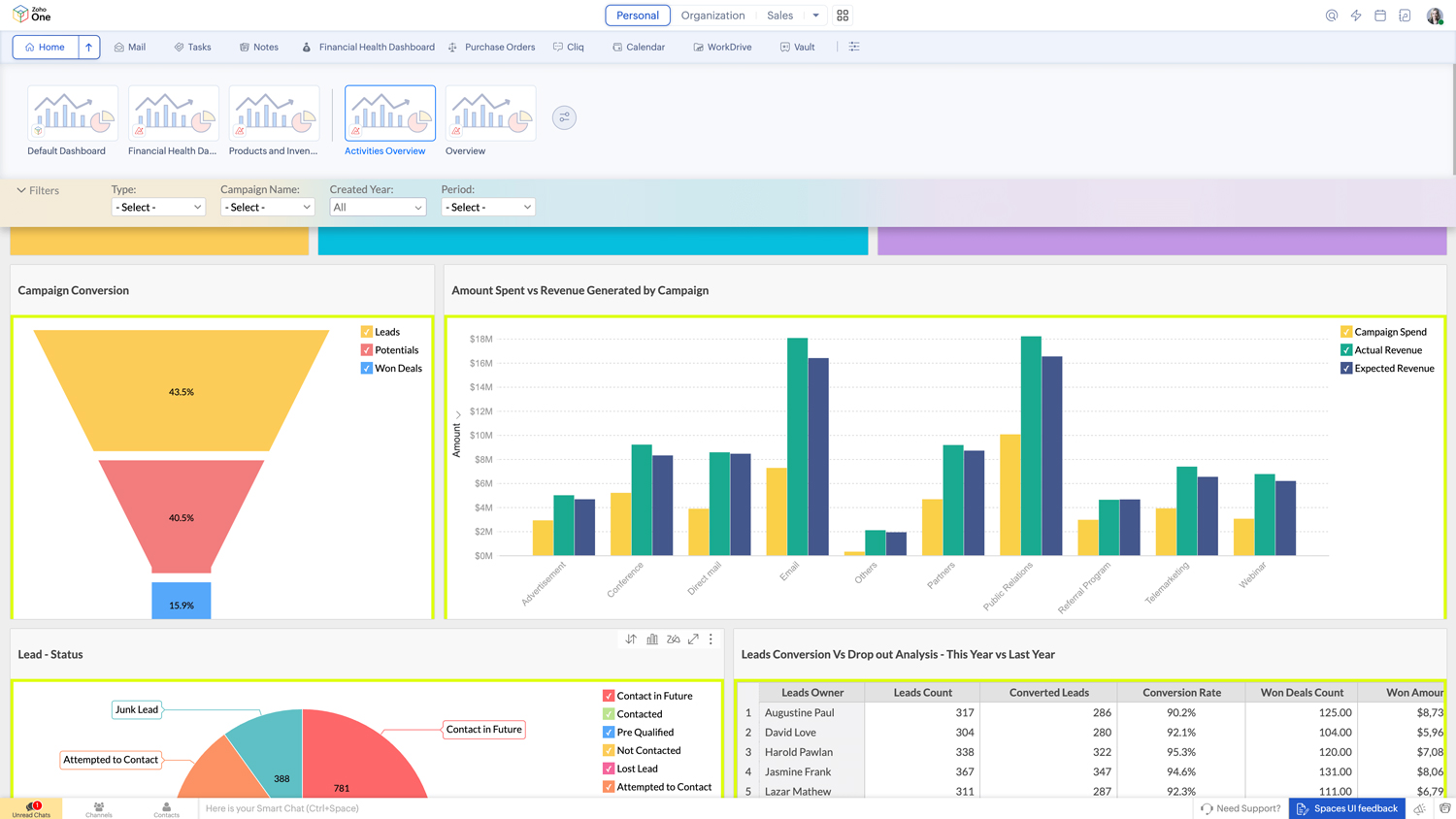
For example, finance and sales can view pipeline movement alongside cash flow trends without switching systems. Operations teams can track inventory alongside demand signals in the same view. This streamlines operations reducing assumptions and enhancing clarity.
Bringing Data Closer to Action
Another important shift involves how dashboards are positioned within the system. Instead of being isolated reporting layers, they’re embedded into the flow of work.
This means analytics, operational data, and real-time updates exist within the same environment. Teams don’t need to check other sources to understand the performance. It’s already in front of them. Over time, this changes behavior. Teams rely less on manual reports and more on real-time visibility. Decisions become more grounded because they’re based on current signals rather than outdated snapshots.
Why This Matters for Growing Businesses
As organizations grow, they face increasing complexity, with more tools, more data, and greater dependencies. Without the right visibility layer, decision-making slows down. This is not because teams lack capability, but because they lack clarity.
In these situations, platforms like Zoho One stand out. They don’t just connect applications, but rethink how information is experienced across the business. This marks the shift from collecting data to truly understanding it.
Why Choose Xponential Digital
While implementing dashboards is easy, designing them around how your business actually thinks and operates is not. That’s where Xponential Digital supports forward-thinking organizations. From structuring data flows to aligning dashboards with real decision points, they ensure your teams act on the displayed information with confidence. Consult Xponential Digital to integrate Zoho One into your workflow.







 Xponential Digital